
New book and music album!
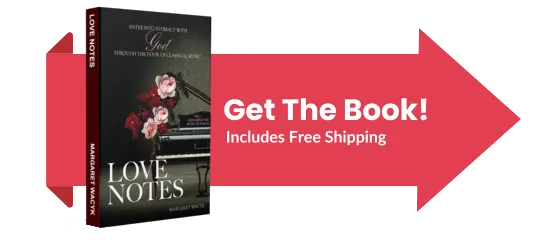
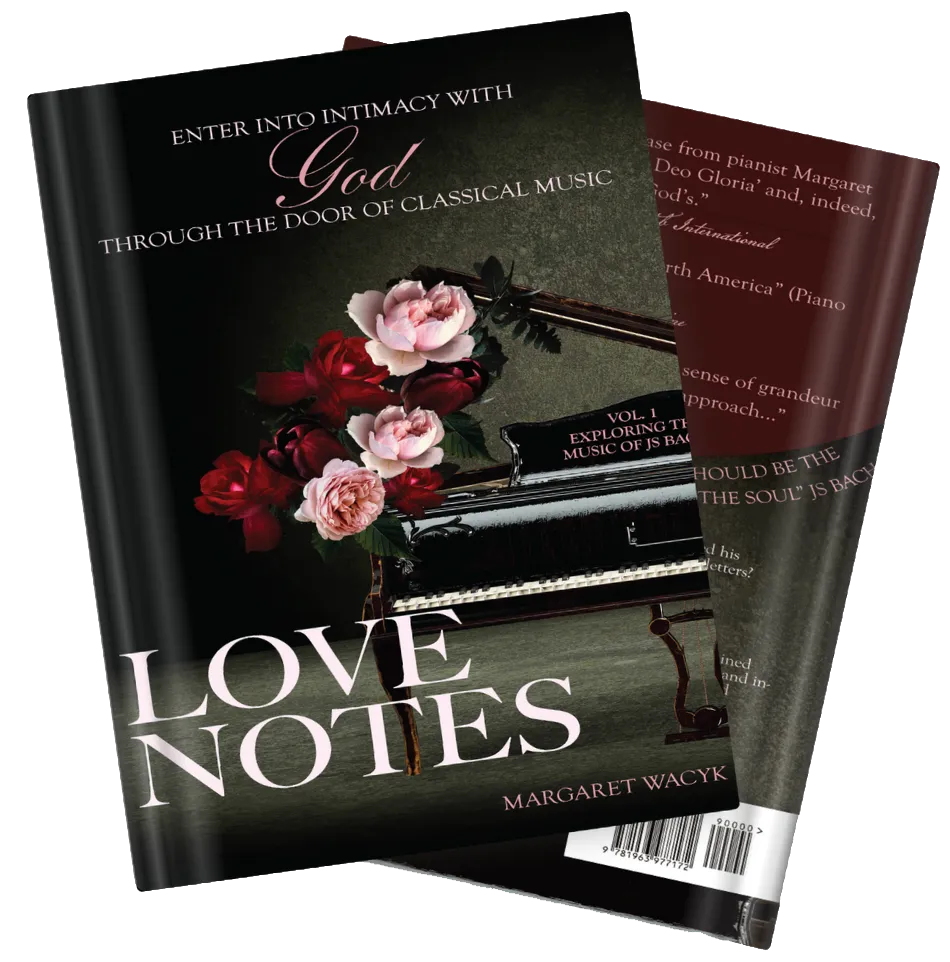
LOVE NOTES
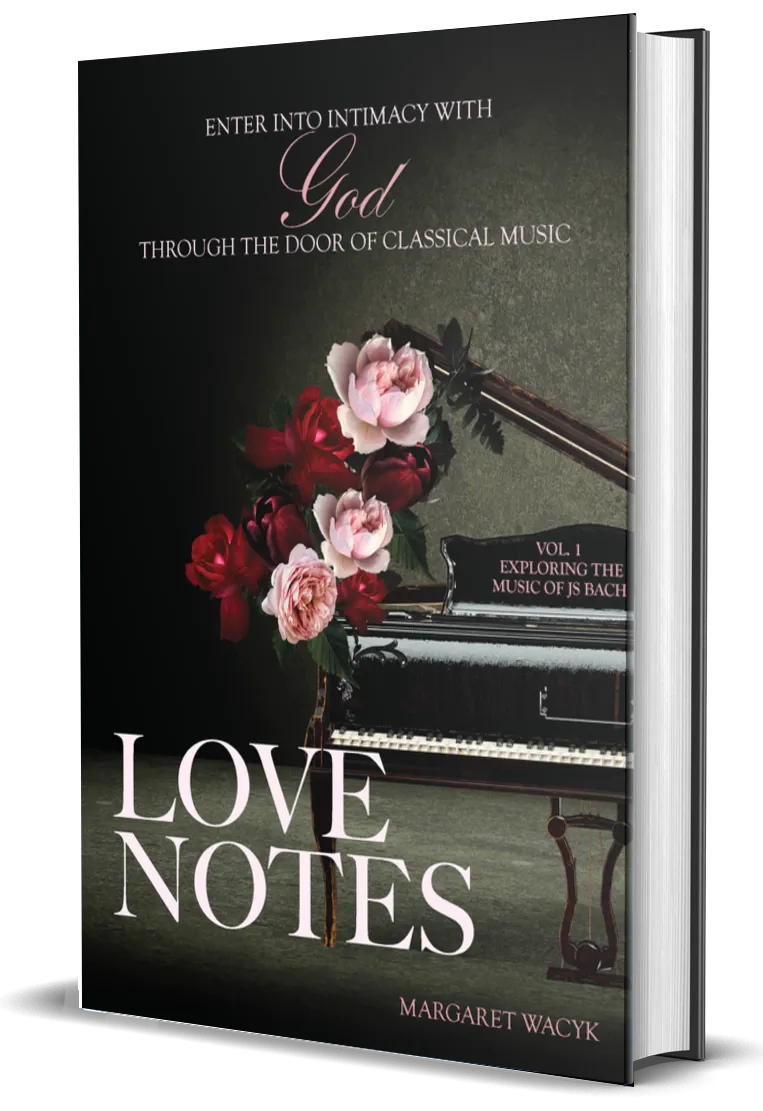
Enter into intimacy with God through the door of classical music
Get the 192 Page Book
and MP3 Music Album
AT A DISCOUNTED PRICE
I agree to terms and conditions provided. By providing my phone number, I agree to receive text messages from the business.

A BOOK FOR A TIME SUCH AS THIS!!
"This book when used in conjunction with the recording, "Soli Deo Gloria", will set off a multi-sensory transformation to benefit physical, mental and spiritual well being!"
—Dan M,
Houston, TX
A SURGEON'S FAVORITE MEDICINE!!
"My patients require less sedation, do better during heart procedures and have faster recovery times when I play Margaret's tracks”
—Dr. Delia Cotiga
Warren, NJ
ORIGINAL REVELATION!!
"Great Book. Filled with fresh insight and original revelation into JS Bach, his music and music itself. It should be a required read for any person…”
—Sue Wong,
Washington, DC
New book and music album!
LOVE NOTES
Enter into intimacy with God through the door of classical music
Get the 192 Page Book and Music Album for
(pretty close to) FREE
You only pay for shipping and materials
A BOOK FOR A TIME SUCH AS THIS!!
"Ms. Wacyk's authenticity, depth of knowledge and experience will reignite the mind, heart and spirit of all readers.
Plus, this book when used in conjunction with the recording, "Soli Deo Gloria", will set off a multi-sensory transformation to benefit physical, mental and spiritual well being!"
—Dan. M,
Houston, TX
A SURGEON'S FAVORITE MEDICINE
"My patients require less sedation, do better during heart procedures and have faster recovery times when I play Margaret's tracks”
—Dr. D. Cotiga
Cardiologist
ORIGINAL REVELATION
"Great Book. Filled with fresh insight and original revelation into JS Bach, his music and music itself. It should be a required read for any person…”
—Sue Wong, NJ
A WAY TO UPGRADE YOUR BRAIN
(That Actually Works)
Three Major Transformations Emerge After Reading This Book…
1.
YOU WILL LEARN THE
TOOLS TO SELF HEAL
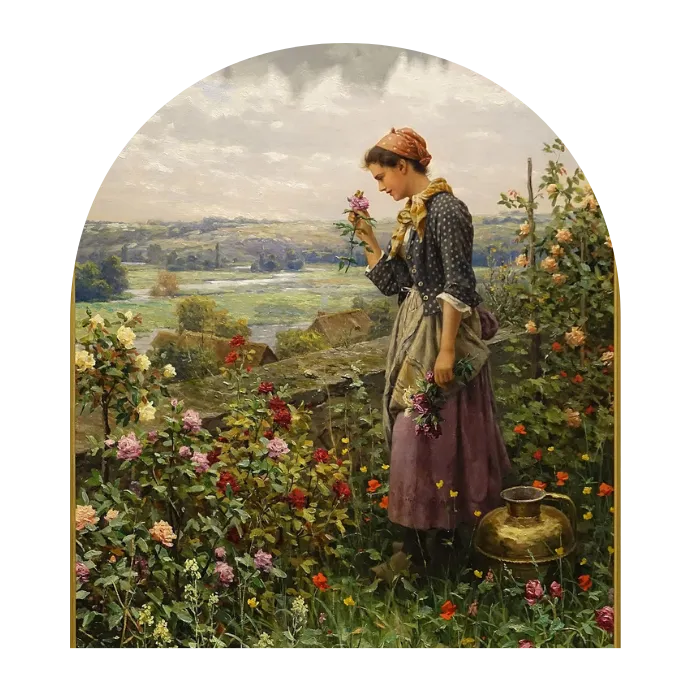
Restore your body, mind and spirit by reconnecting to natural harmony
Friend, we are entering a new frontier. Music is the new medicine, as scientists are now proving.
Classical music works on a cellular level!!
Doctors who analyzed the blood of a patient suffering with inflammation before and after the playing of a classical symphony were amazed--
Mozart's music altered the blood composition!
There was a reduction of white blood cell count and significant reduction in the inflammation!
If you’re someone who is searching for ways to lead a healthy life in body, mind and spirit with a natural and Biblically grounded approach, Love Notes is your tool.
Classical music is a wonder-drug with no side effects (only pleasure!) It lowers blood pressure, helps with pain management, and triggers endorphin release, the 'pleasure' hormone. Ancients knew that music does more than entertain. They revered it as a SCIENCE and used it effectively to heal.
Move your mountain of illness, pain and discomfort with music.
Music is movement and carries toxins away.
When we experience sickness of any sort, we are essentially ‘blocked’. The special sounds of the music in Love Notes move and release the flow of natural energy.
2.
YOU WILL GAIN
CONTROL OF YOUR MIND
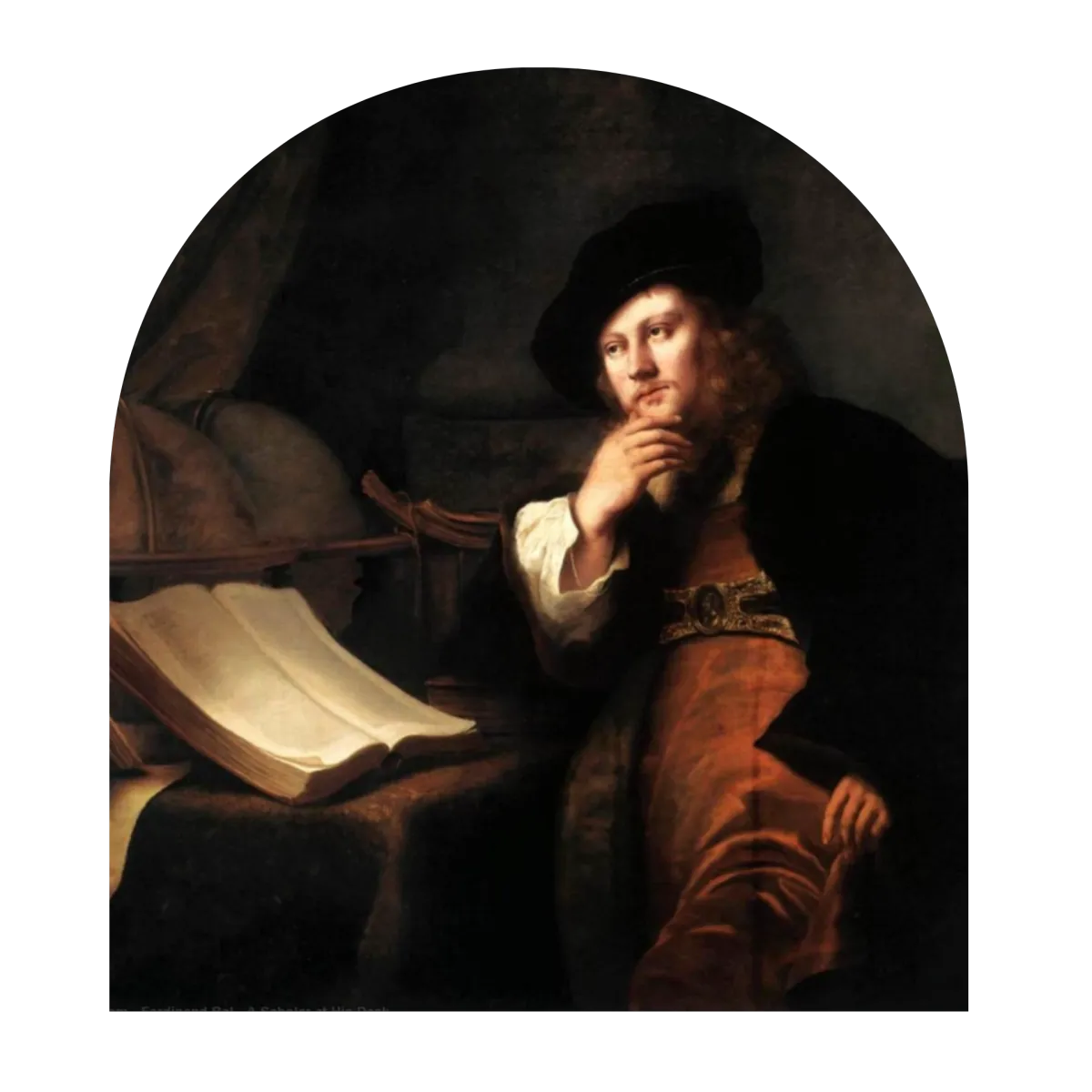
If you find yourself stressed, experience 'mental fog' or feel depressed you must learn to regulate your brain waves.
A 2020 study found that stimulation through Bach's complex harmonies increased gamma wave activity, which is linked to enhanced memory and consciousness.
Your ears are the gateway to a focused mind.
Through your ears you trigger your nervous system out of the stressful ‘fight or flight’ mode and into the more relaxed ‘rest and digest’ mode.
The special sounds featured in Love Notes stimulate the ears to harmonize your parasympathetic nervous system through the vagus nerve, a key player in your health and well being.
3.
YOU WILL ENHANCE YOUR PRAYER LIFE
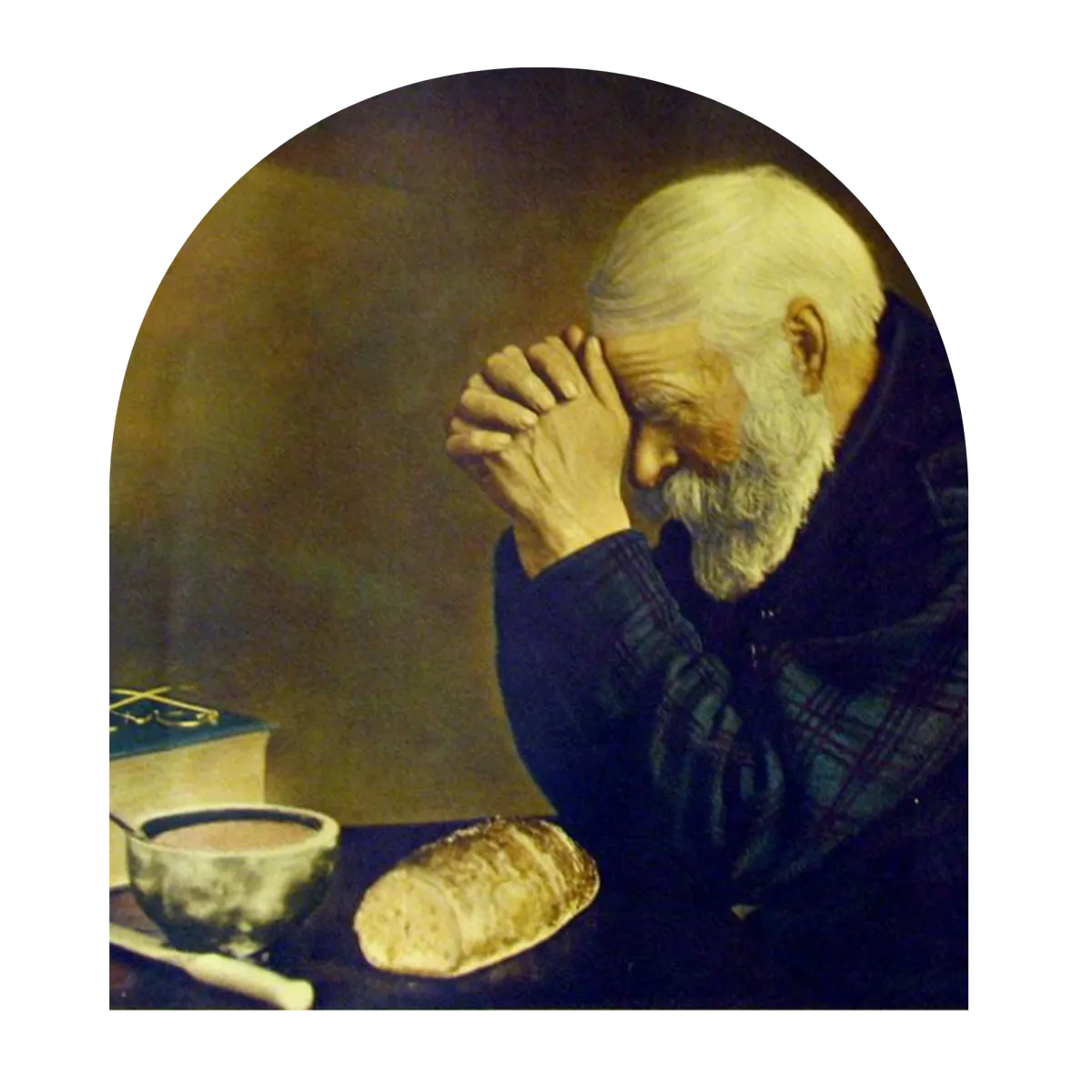
Did you know that music is an important feature of the Bible? In fact the word to 'hear or listen' occurs in the bible over 550 times!
The music of JS Bach is supremely suited to 'tune' the ear to worship. Why?
Here are just a few reasons:
-He had a genius of writing mathematically complex, yet passionate music that reflects the natural laws of God's creation;
-Bach had an encyclopedic knowledge of the Bible which he infused into his compositions; There are hidden codes in his music that release blessing. (For instance he 'quotes' Scriptural passages by the arrangement and numbers of notes he uses in his sacred works!) Simply put, his genius is inconceivable!!
Plus, he produced a prolific amount of ‘perfect’ music that still baffles and confounds even the greatest minds.
The anointing of God is in every note. He dedicated each of his compositions to the Glory of God Alone, not to take any credit.
Engaging with this music while meditating on the paired Scripture is a heavenly experience.
ABOUT THE BOOK
Watch This Video Interview with The Author
HELLO, I'M MARGARET WACYK
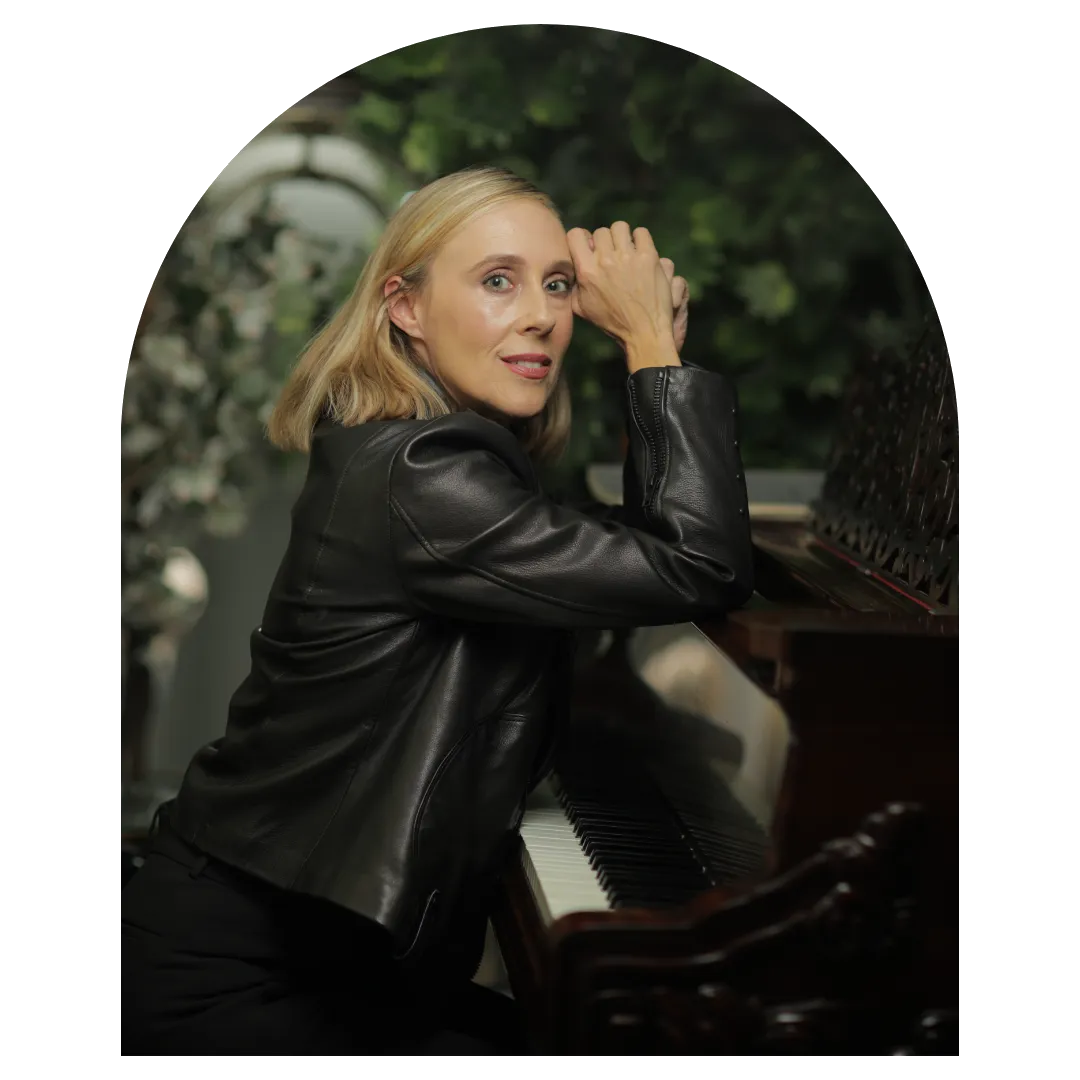
I am a concert pianist, author and Grammy acclaimed recording artist. I help people connect to the healing power of classical music to reclaim their health, enrich their faith and renew their minds and by so doing, resonate in their limitless potential to become the person they were born to be.
WHY I'M GIVING THE BOOK & RECORDING AWAY AT COST
(And no, it's not a gimmick.)
I am selling each recording and book at the cost of printing, fulfillment, and shipping, and not a penny more.
Why am I doing this?
Really, there are two reasons I'm doing this.
First, in my life I experienced challenges such as chronic pain, depression and a cancer scare. After 3 long years with back pain I was left physically, mentally and spiritually broken. I looked for help in all the conventional and expensive methods, but they never felt ‘right’ to me.
Then one day I hit rock bottom. I was so broken that I collapsed on the ground and wept. I was desperate and wrought with pain. This emotion grew in intensity until out of the blue a sound welled from deep within me--it could not be held back. Without warning a jolting sound came out of me, like a guttural groan or a lion's roar from some place deep within my whole being. It actually shocked me...but at the same time it felt like a great release. Suddenly I felt a shift, as if a load was lifted. That act of attaching a sound to my pain was the beginning of my healing. In that experience God revealed to me that:
Sound is the Shortcut!
Having spent a lifetime in front of the piano playing the music of composers such as Bach, Beethoven and Mozart I sensed the presence of God through these anointed sounds. I knew that there was healing potential related to the harmonies, architecture of the classical music and spiritual intent of both the composer and the performer.
Once released it caused a shift in the atmosphere: Transformation, healing, elevation. From that moment on, my life mission became to re-link the Christian message as it was intended by the classical composers so others too could reap the benefits. Scripture was the heart of classical music then and it is now.
I'm doing this to also raise attention to a very important and overlooked entryway for wellness in our body: the ear. Much toxicity enters through our ‘ear-gate.’ We live in a noisy world that erodes our peace, health and joy.
The lack of exposure to beautiful sounds and over-exposure to media sounds bytes is the big health problem that isn’t much discussed. Education about great music has been largely stripped from schools. New audiences are not being created.
This leaves the classical music industry under the threat of becoming extinct. Another problem is that fancy concert halls and big-ticket classical programs fail to connect the most important message: There is an intimacy and transformative personal message that can move us, heal us and 're-tune' us...if only we have the tools.
The simple act of engaging with beautiful classical music paired with Scripture does far more than one can imagine…especially when evoked with prayerful intent. This creates an avenue to healing.
It brings self-healing power back to each and every one of us.
Therefore, my goal is to get this book into as many hands as possible.
The second reason I'm selling this book at cost is because I want to start a collaborative movement, and I can't do it alone. I want to build a community on-line in forums and live concerts that spreads the intent of classical music that JS Bach expressed precisely: Soli Deo Gloria: To God Alone the Glory. Classical Music paired with Scripture is a powerful worship experience.
I also want to teach you more about these ‘special sounds’ and need to do it in a private community, as this is sacred information. This is for those who truly ‘have an ear to listen.’ I want to gain your trust by being transparent.
One more thought.
I know that the tools and principles you learn in this book will do more than acquaint you with beautiful music. They are transformative tools that will pay dividends in your everyday life!
⚠️Limited Inventory
I have printed 500 copies of the book. After the 500 copies sell out, there’s no guarantee I’ll do another print run. Why? Because this takes time, money and energy to maintain. (I don’t want to run a business and hire people…I’d much rather spend time to make music and serve my on-line Love Note Listeners community.)
The inventory is updated hourly. If you order and the book is already sold out, you will be refunded.
If you are reading this message then there are still copies left.
This Book Has Changed Lives
Don’t Take My Word for It—Hear What Others Have to Say…

Why Bach? Why Now? Soli Deo Gloria is a book for a time such as this!
"Generosity of spirit best describes the treatment of the fascinating, phenomenal concepts which are blended and communicated in this book!
Never before has Bach's spiritual side been exposed with relationship to the music he left to this world, and mostly without thanks during Bach's life. In this narrative, the reader not only becomes acquainted with the uniqueness of Bach, but he or she actually begins to see the world, then and now, through his eyes.
Ms. Wacyk introduces and explains the techniques, truth and beauty of Bach's work and invites the reader to be transformed by the wisdom that fills every page!
Why Bach? Why now? We are living in a world of media that is inundating our airwaves, satellites and bookshelves with trash--Ms. Wacyk's authenticity, depth of knowledge and experience will reignite the mind, heart and spirit of all readers.
Plus, this book when used in conjunction with the recording, "Soli Deo Gloria", will set off a multi-sensory transformation to benefit physical, mental and spiritual well being!
It is not enough to read this review- Readers and music lovers: get these materials and see where they will take you- you will not regret it!"
~Dan M.
Read, Listen...Learn and ENJOY
"Composers, musicians, music educators, classical music devotees, history buffs, Christians, avid readers...Soli Deo Gloria an Anthem of Faith is a great read.
Margaret Wacyk's extensive research on J.S. Bach's music and life legacy is presented in a way that will inform and inspire you, and in my estimation, prompt you to listen to Bach's works with newly acquired insights.
Wacyk's companion CD showcases her virtuosity as a pianist and J.S. Bach's brilliance as a composer. You will be glad you added the book and CD to your collection."
~Stephanie DeGeneste
Original Revelation
"Great Book. Filled with fresh insight and original revelation into JS Bach, his music and music itself. It should be a required read for any person…"
~Sue, New Jersey
Beautiful Music
"I really loved the beautiful pieces, even though I am far from an expert, piano music always brings me a special connection and I greatly enjoyed this collection."
~Andreas, Washington DC
Frequently Asked Questions
Your most asked questions...
How long will it take for the book to arrive?
Your book will be packaged up beautifully, and sent from Taylor, Michigan, USA.
For U.S. customers, you can expect the book to arrive in 7-15 business days (could be a lot sooner).
For International, you can expect the book to arrive in 10-22 business days (could be a lot sooner).
You will receive a tracking number via email immediately after your order.
If you have any questions, don't hesitate to contact support (listed at the footer of this page).
Do you offer refunds?
Yes. I believe in this book so much that if you're unsatisfied (for any reason), you can send the book back within one-year, and get a 100% refund. No questions asked. Just contact me via the support details at the footer of this page. I'll share the return address, and refund every penny.
If you're not happy, I'm not happy!
ABOUT THE AUTHOR
Margaret believes that great music is a magnetic highway.
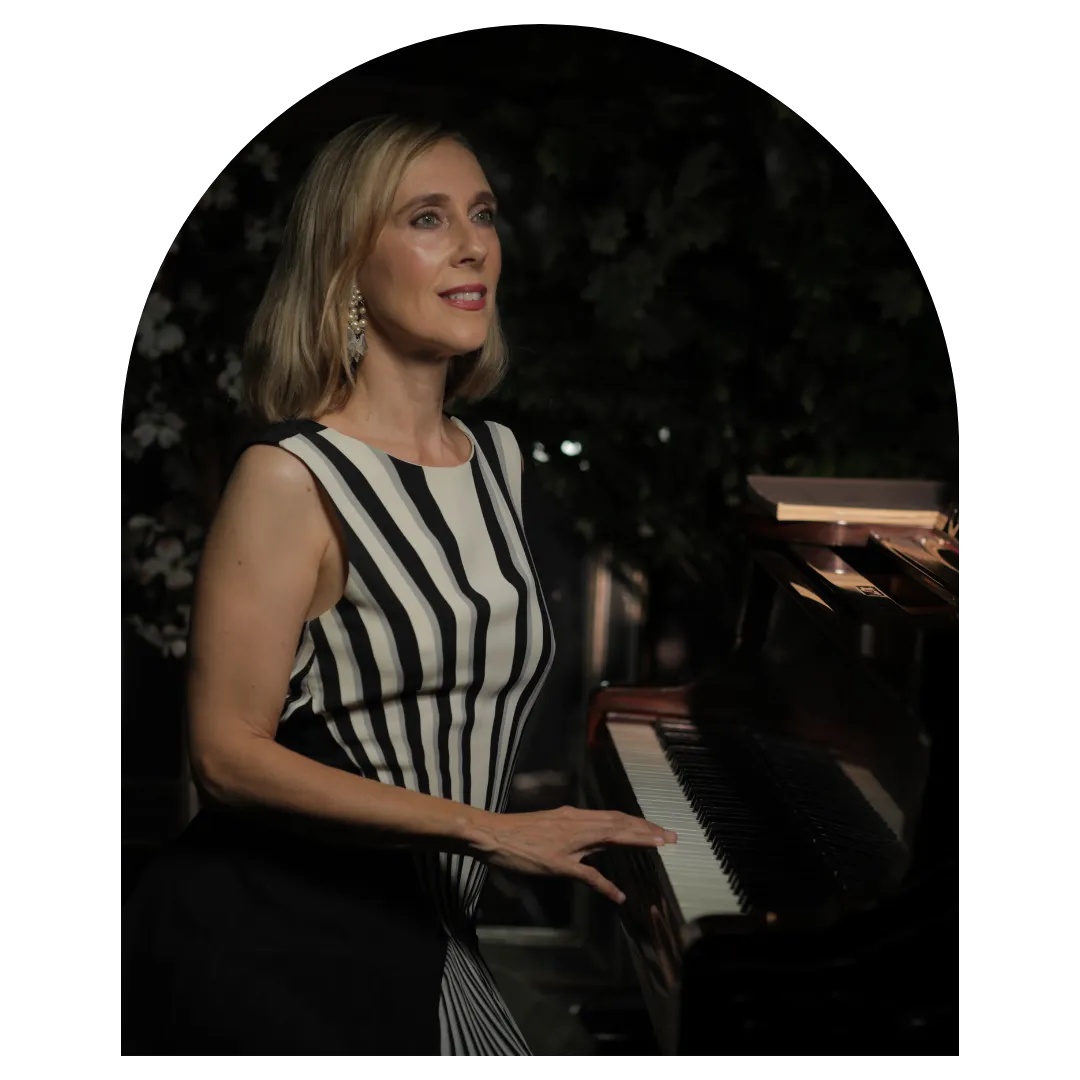
MARGARET WACYK,
Biography
“We don’t enter it to go somewhere...but to take a journey of the soul.”
Creating innovative programs is a passion for this artist who invites listeners to experiences of beauty by connecting to great music.
Hailed by the American Music Guide for her “versatility in many styles that emphasize chameleon-like transformations” Margaret Wacyk is a trailblazer who is breathing new life into the art of piano playing.
Ms. Wacyk is a concert pianist trained in the 19th century tradition of Golden Tone.
Additionally, she is the author of two books, a composer and recording artist. Her second recording, Piano Works was chosen as Gramophone Magazine’s Best New Releases from North America.
Margaret was born into a musical family and her talent for music became evident from an early age. She graduated from New York University and studied with legendary teachers such as Jasha Zayde, Dorothy Priesing, Justin Dello Joio and Mordecai Shehori. She supplemented her studies in composition at the Juilliard School with Stanley Wolfe and Dan Coleman. Her original compositions were featured in the film The Lesson.
As a soloist, Ms. Wacyk made her NYC debut at Carnegie Recital Hall in 2000 and has sinceconcertized in the United States and Europe. Notable appearances include her performance with the Gulf Coast Symphony in Florida, a solo appearance at the BIG Arts festival in Sanibel,Florida and multiple returns to Carnegie Recital Hall in NYC.
As a performer Margaret revives the tradition of expressive piano playing from the 19thcentury. She is the creator of the Golden Tone Technique method, an approach based on the Grand Tradition of the past. She teaches this unique course through her on-line academy and privately to students around the world.
Margaret is passionate about creating innovative programs that introduce new audiences intothe powerful world of classical music. Using her talent in storytelling, film making, and poetry she makes the music come alive forlisteners of all ages and backgrounds.
During the 2020-2021 pandemic, Margaret launched ‘Prayer Piano’ a weekly Sunday Livestream on YouTube that drew audiences in from around the world.
The goal? Spread joy through merging great music with a message of hope.
This formula was a resounding success in the dark days of the pandemic. It created an engaged community of loyal followers that kept coming every week for more marvelous music, magnetic stories and comfort.
This gave her the inspiration to continue with larger length productions. ‘Beholding: A Spiritual journey through the Psalms of King David and Preludes of Frederick Chopin’ is the first of its kind. The video series premiered on Patreon in the Fall of 2022.
The Spring-Summer of 2024 brought a new recording project featuring the music of Bach called “The Courts of Heaven” and the launch of the Music To Compose You Podcast.
The 2025 season begins with the launch of Volume One of her new book series: Love Notes: Enter into Intimacy with God Through the Door of Classical Music. Through the Love Notes series, Margaret is sharing the Christian message in the music and lives of the great composers. Spring 2025 brings Margaret to the concert stage for more inspiring and faith-filled events throughout the world.
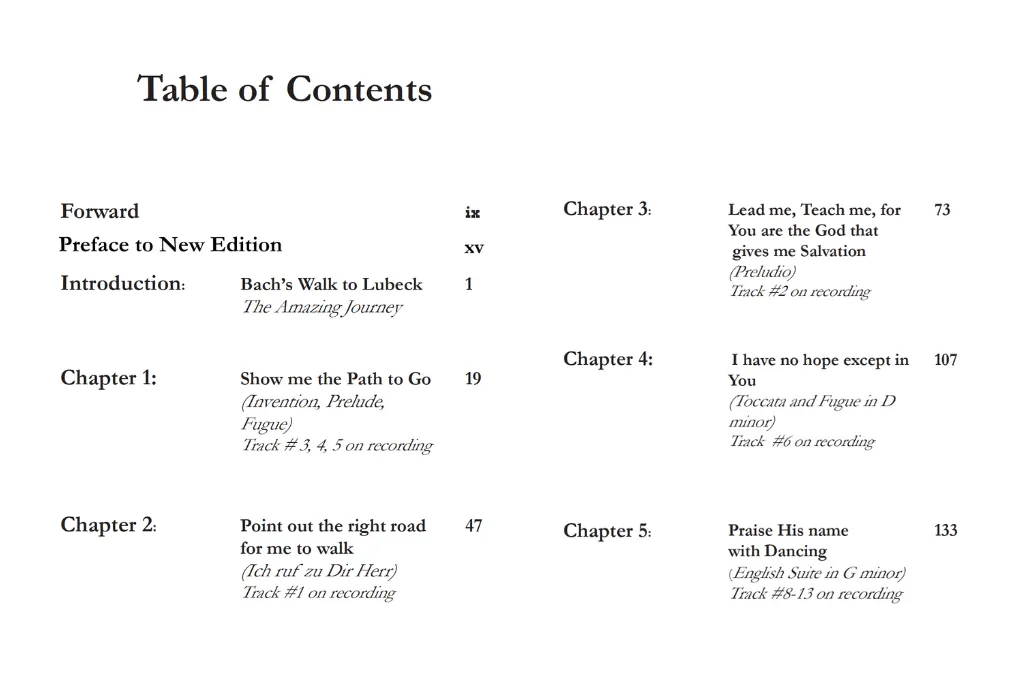
A Peek Inside the Table of
Contents...
You Have Stumbled Upon The
Most Exciting Movement
for Unlimited Breakthrough
Please read the following letter:
Dear Friend,
More than a "friend", I consider you a brother or sister if you're someone who's committed to seeking intimacy with God. More than just going through the motions, you are someone who favors relationship over religion and sees God in things big and small.
Perhaps you gaze at an apple blossom and wonder why it always has 5 petals…or pick up a nautilus shell along the beach and marvel at how it resembles a cosmic spiral galaxy. It is in these utterly marvelous and often overlooked moments in life where we pull closer into intimacy with God. We see that nothing is random…and that there is a perfect design and substance behind all creation.
I believe that you’ve stumbled upon this website for a reason. And I do believe that the information you will receive here will change your life. Many times even the most commited Christians struggle with something called ‘hidden strings.’
This is something that even St. Paul referred to in Romans 7:15: “What I want to do I do not do, but what I hate I do.”
Hidden strings feel like a counter force taking you in the direction that you don’t want, despite the best of your efforts. If you are struggling with a particular challenge right now- maybe in your health, a difficult relationship or stress from your job you’ve come to the right place.
Together we are going to drill down to the essence behind why certain ‘hidden strings’ are present in your life and fix it so that you can be in full joy, purpose and fulfillment.
PS…If you are wondering how this works, here’s a hint: Hidden strings operate under the same laws as do the strings on any instrument like a guitar, violin or cello. Using the Bible, special sounds and the natural laws of music you will literally ‘tune up’.
If this interests you, then I'd like you to join me in my private community. On a regular basis, I will be writing to you and sharing ways to go deeper in this transformative journey.
I'll be sharing the latest events from my life. And I'll be sharing the very best lessons about healing, the Biblical connection to music and living the life you were born to live.
Here’s More of What You Get When
You Order the Book...
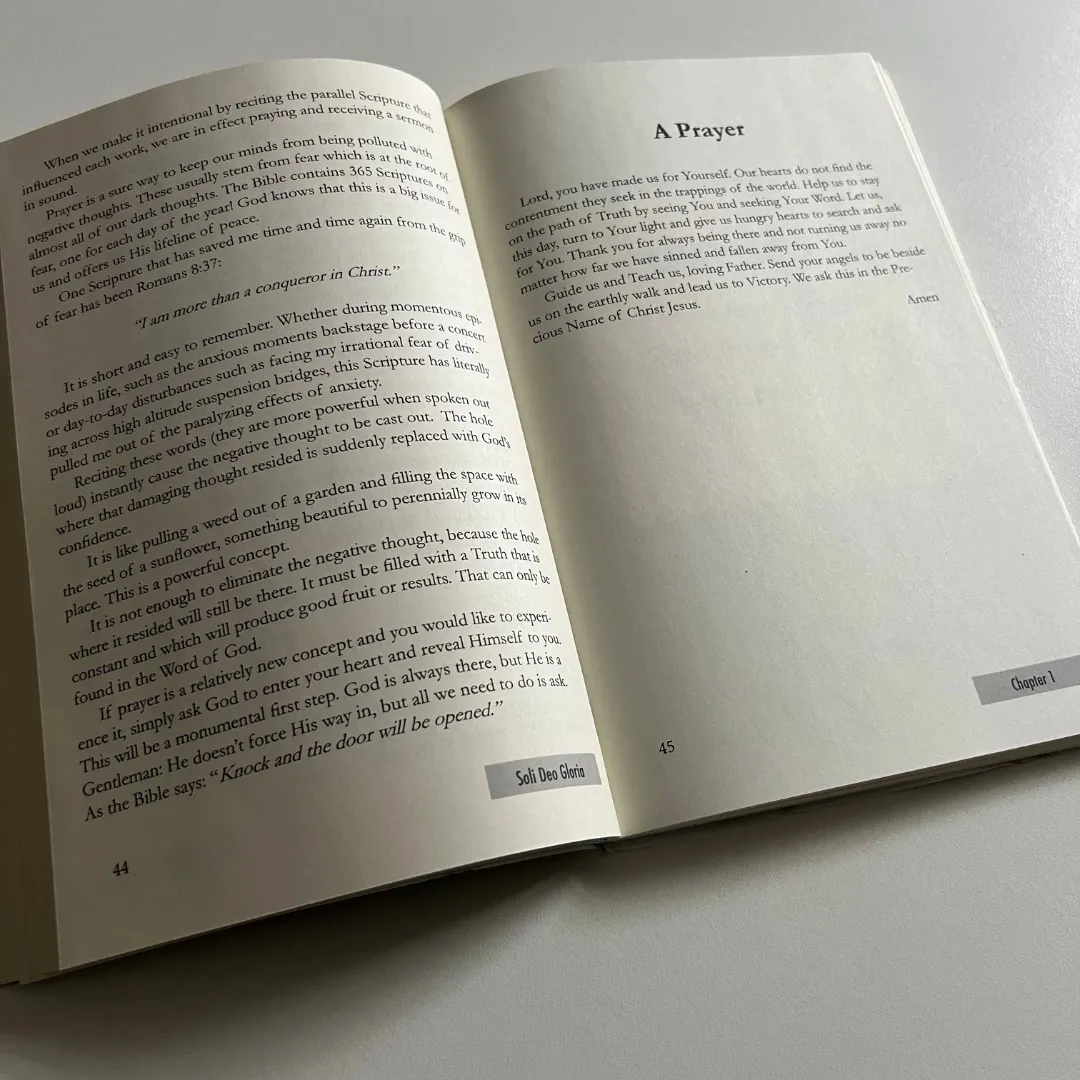
192 pages of powerful information that makes the music and message come to life.
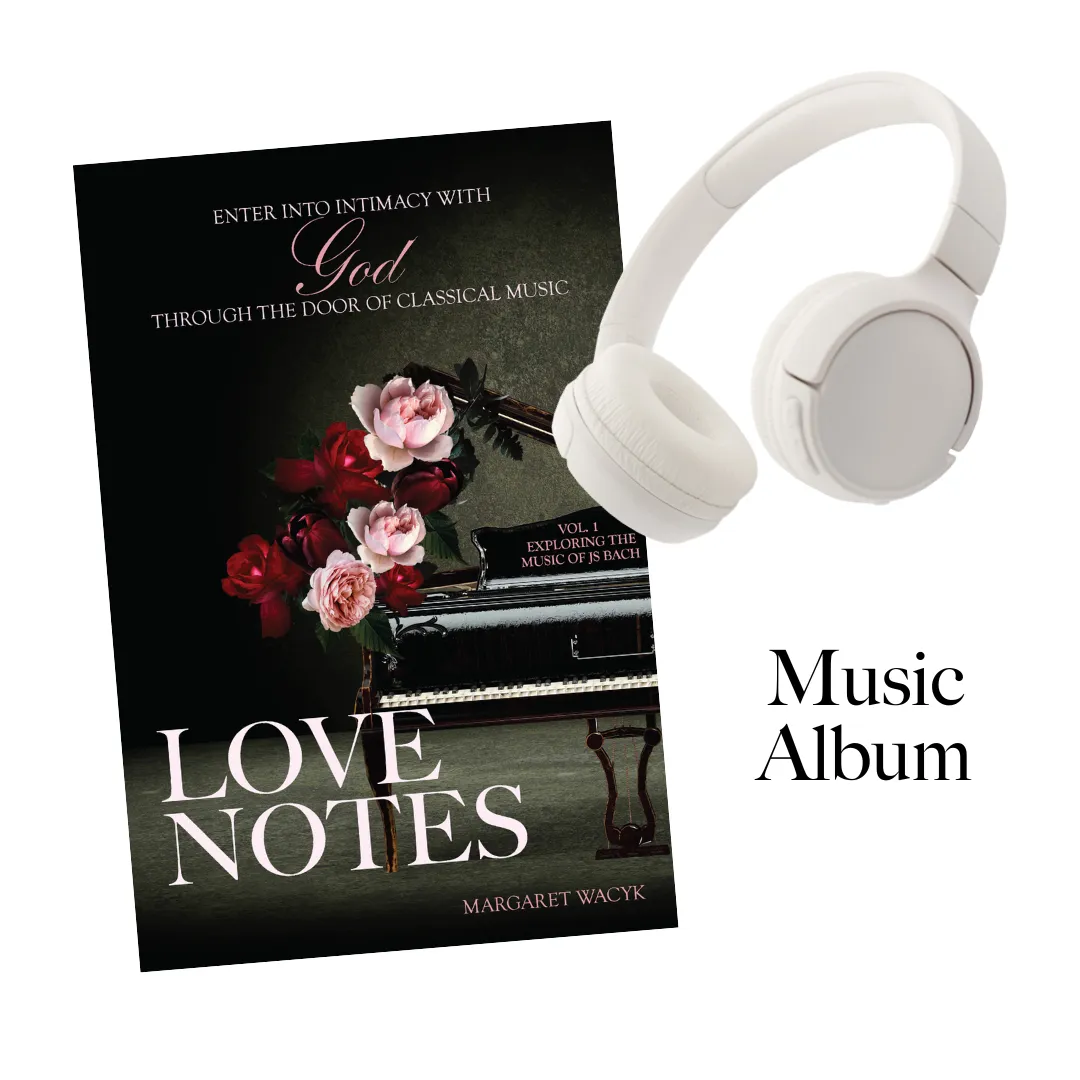
14 specially recorded tracks by Margaret Wacyk of the music of JS Bach.
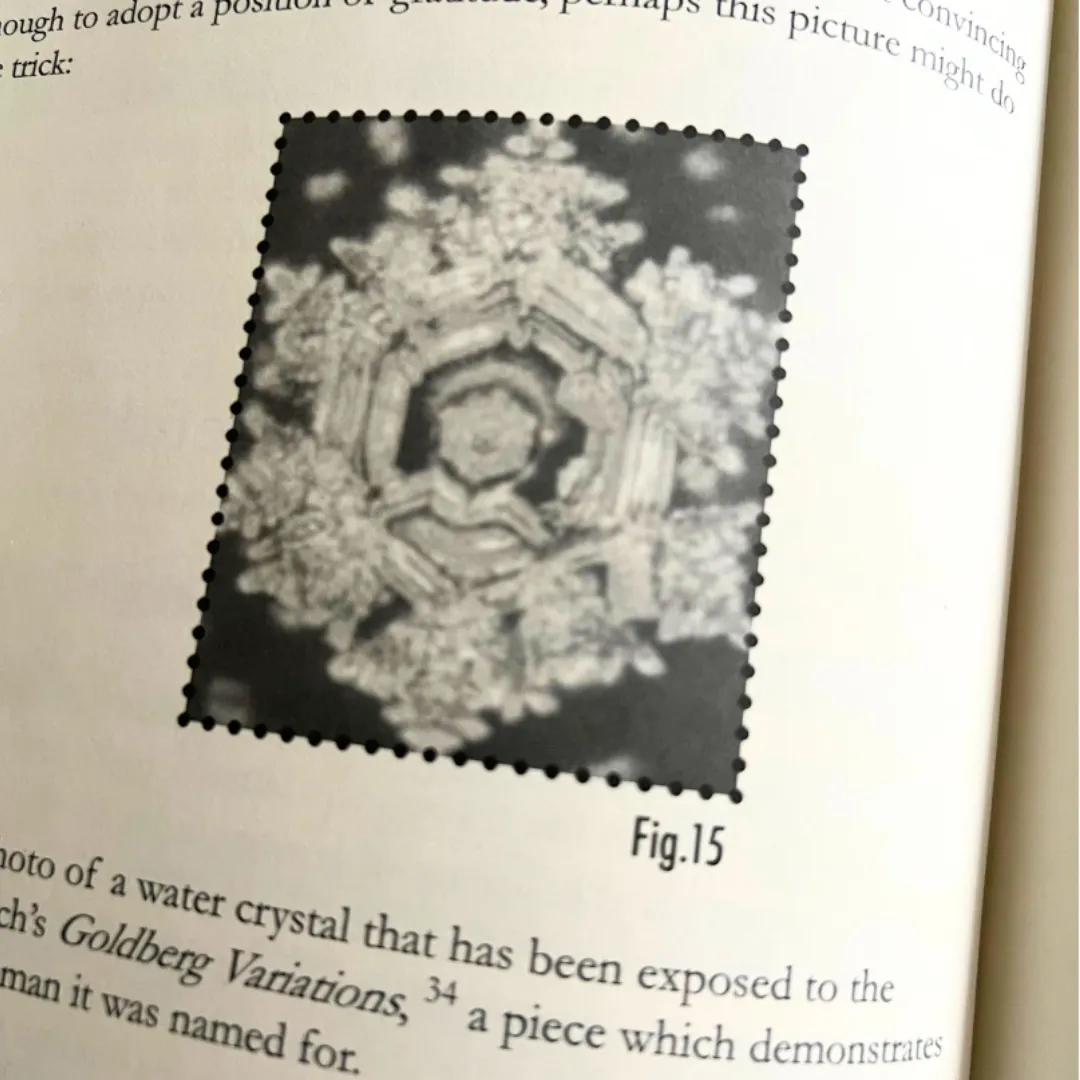
26+ photos richly illustrating the material that you'll learn in the book.
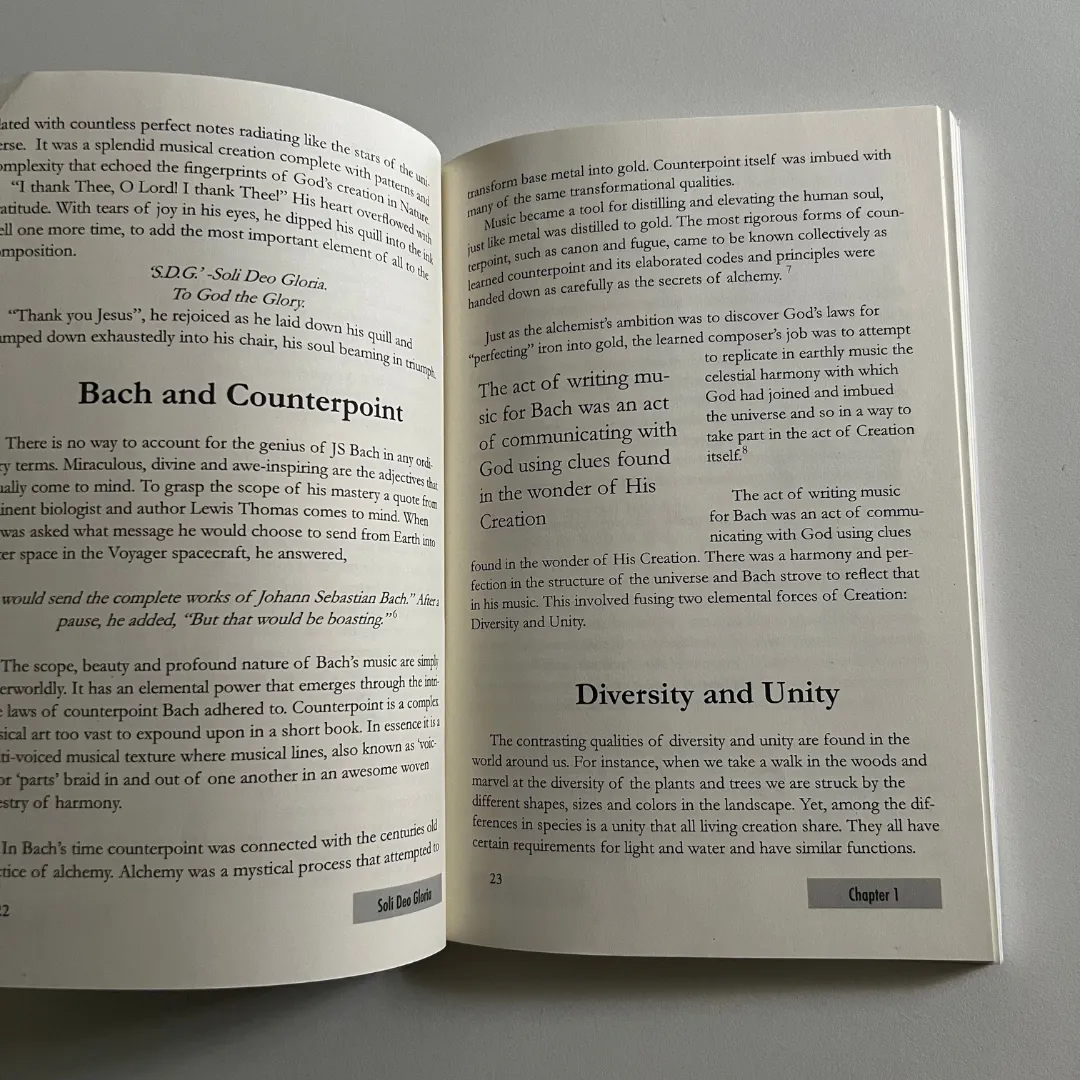
Beautiful typesetting and interior design that elegantly teaches the material.
Grab Your Copy Now
If you want to heal your body, energize your mind, or take your spiritual life to the next level, then here's what you need to know. There is a secret ‘fast pass’ that is going to accelerate your progress .
If you want to heal your body, the answer isn't going to more doctors; if you want to break free from depression, the answer isn't more talk therapy; if you want to get closer to God, the answer isn’t necessarily praying more.
In order to achieve extraordinary results, you must think AND listen differently.
And here’s what you need to know: Healing does not come from outside- in; but Inside-out.
There is a mighty healing machine inside you…and this book, Love Notes shows you how to turn it on. The healing I’m talking about doesn’t involve pills, expensive therapies or fancy equipment you need to buy. No, all you need to access the healing machine ‘pre-loaded’ inside you is the ‘secret passcode’’ to turn it on…
The secret passcode is ‘special sounds.’
One of the questions I get asked a lot is “As a Christian, is it okay for me to use sound in healing?’. Did you ever hear the bible story of the Walls of Jericho coming down? How did that happen? It was with ‘special sounds’. Think about it: We don’t necessarily need music to survive, (I mean, if you were on a desert island food, shelter, clothing would be pretty important, but your Itunes playlist wouldn't really be)...OR WOULD IT?
CONSIDER THIS: Music has existed since the beginning of time. Since ancient times, people have sought out music to connect to something higher...something beyond our basic needs, yet intrinsic to our very nature of being.
Have we been missing something? Is the language of sound and music more important than we realize? Is great music the missing link to health?
I wrote a 192 page book about these special sounds written by the 18th century composer JS Bach, also known as the 5th evangelist. You get the book along with a 14 track recording I perform on a specially tuned piano of his devotional music.
It will serve as your secret weapon, your secret tool, and turn on the healing machine inside you. If it doesn't, then send it back and I'll refund you in full, no questions asked.
I'm that confident it will upgrade your mind and elevate your heart. But don't take it from me. Take it from Jonathan Woolf from MusicWeb International who said, “Bach is the focus of this release Margaret Wacyk, in an album devoted ‘Soli Deo Gloria’ and, indeed, the Glory is God’s.”
Or cardiologist Dr. Delia Cotiga who plays this music album for her patients during surgical procedures and claims, “the patients require less sedation, do better during the procedure and have faster recovery times when I play Margaret's tracks”
I believe in this book so much that I'm making it available at a special price on this page. Grab your copy while it's still available and get ready for the inspirational ride of your life.

Margaret's Bold Guarantee
I am so confident my book will positively add to your wellness, cultural life and spiritual growth that if you're unsatisfied (for whatever reason) you can send the book back within one year and receive a 100% refund.
No questions asked!
Just contact me via the support details at the bottom of this page. You will be given a return address to send the book back to. I will personally see to it that you are refunded every penny both the cost of the book and the shipping cost.

Contact


+1 844-410-5845
45 Oak Street
Basking Ridge, NJ 07920

Mon. - Fri. 10 a.m. - 6 p.m. ET
Media


I help people connect to the healing power of classical music to reclaim their health, enrich their faith and renew their minds and by so doing, resonate in their limitless potential to become the person they were born to be.
Terms of Service Privacy Policy
Terms of Service
Privacy Policy